


Key summary
- Strange noises, leaks and pressure drops are early warning signs of hydraulic system issues that can lead to costly downtime if ignored.
- Common hydraulic problems are often caused by contamination, air ingress, worn components or poor fluid condition, all of which can accelerate wear and reduce equipment performance.
- Proactive maintenance, including regular inspections, correct hydraulic fluid selection and routine fluid analysis, can help fleet managers improve reliability, extend component life and prevent major failures.
Hydraulic systems power nearly every critical movement in off-road machinery. One hydraulic issue can idle an excavator, loader, haul truck or drilling unit, so it should never be ignored. Small symptoms, like strange noises, leaks and pressure fluctuations, are usually indicators that something is wrong, and they usually appear weeks before catastrophic failure.
Fleet managers who recognise warning signs early can reduce downtime and repair costs. Meanwhile, preventative maintenance is cheaper than reactive repairs.
In this guide, we’ll explore how to translate your machine’s symptoms into actionable maintenance decisions. Let’s begin.
What a whining or knocking noise usually means
If you’ve noticed your machinery is making whining or knocking noises, it may be difficult to know if there is a critical issue and exactly where it is coming from. If you are able to identify the root cause quickly, it is often easier to address the problem before it gets worse.
“Whining noises”
Hydraulic pumps often ‘whine’ when vapour bubbles collapse under pressure, which is linked to poor lubrication or contamination. The whining sound usually gets louder as the machine works harder.
Common causes
- Air entrainment: Tiny air bubbles become trapped in the fluid, which may cause whining, spongy operation or sluggish performance.
- Cavitation: When the pump tries to pull more fluid than can be supplied, it creates a vacuum. This vaporises the oil and vapour bubbles implode under pressure, causing whining.
- Low fluid levels: This can lead to both cavitation and aeration as the pump is pulling in more air than fluid. High-pitched whining sounds can indicate severe stress on the pump.
- Internal pump failure: An old, worn or misaligned pump can cause internal friction, leading to ‘whining’.
“Knocking or banging”
Knocking or banging sounds are often an indication of a critical issue within the hydraulics system. The noise may be irregular or erratic and be noticeably loud.
Common causes
- Pressure shock: If valves are sticking or closing suddenly, it can disrupt the flow of fluid. Equally, sudden load changes can cause knocking due to pressure shocks.
- Trapped air: If air enters the system and becomes trapped in the fluid, it can cause banging and overheating.
- Sudden flow restriction: Clogged suction filters, dirty or thick oil, low fluid levels and kinked or wrongly sized suction hoses make it difficult for fluid to flow freely, leading to knocking or banging.
“Jerky or inconsistent movements”
If your machinery is making jerky or inconsistent movements, it’s probably struggling to maintain a steady pressure and fluid flow.
- Aerated fluid: Air in the system makes it difficult to transmit force smoothly and can make movements appear jerky.
- Internal leakage: Worn pumps, seals or leaking valves can hinder the system’s ability to maintain a stable pressure, leading to jerky movement.
- Pressure instability: The system can’t maintain a stable pressure if it struggles to maintain a steady, consistent flow of fluid, making movement inconsistent.
Foaming, cavitation and strange system noises are usually tied to air contamination and fluid degradation. However, these problems are easily preventable with routine oil analysis, monitoring and replacing hydraulic fluid before pump damage occurs, as well as using anti-foam hydraulic fluids to prevent aeration.
Hydraulic leaks: Small drips can become major failures
What may seem like a minor leak initially can have a huge impact on operations. It’s important to identify where the leak is coming from before it becomes a costly repair.
External leaks
External leaks are typically caused by corroded or degraded components. This usually happens due to extreme operating conditions, intense heat and vibrations that can weaken seals and connections. External leaks may come from:
- Hose abrasion
- Seal deterioration
- Loose fittings
- Cylinder seal failure
Internal leaks
When pressurised fluid escapes from high-pressure areas to lower-pressure areas, internal hydraulic leaks occur. It is usually caused by worn parts, contamination and thermal degradation. You may notice:
- Pressure bypass inside cylinders or valves
- Loss of efficiency without visible fluid loss
- Harder-to-detect performance degradation
The hidden costs of leaks
Hydraulic leaks can lead to pressure loss, components overheating and environmental cleanup costs, along with increased fuel consumption and safety risks. These can all be costly to repair, as well as being dangerous to operators. However, regular maintenance and inspections can help you identify leaks early on:
- Check hose routing
- Look for damp fittings
- Monitor fluid top-up frequency
- Inspect seals during scheduled downtime
Selecting the correct hydraulic fluid with strong oxidation resistance and seal compatibility, supported by regular fluid analysis services, can help fleet managers reduce leaks, extend component life and prevent costly hydraulic failures.
What causes pressure drops in hydraulic systems?
When there are internal leaks, component failures, fluid problems, or you experience power loss, that’s usually an indicator that the pressure has dropped in your hydraulic system. But what causes it?
Common causes of pressure drops
Pressure drops are often an early sign that something within the hydraulic system is restricting flow, reducing efficiency or allowing pressure to escape. Identifying the root cause early can help prevent costly downtime and component damage.
Pressure drops are usually caused by the following:
- Clogged filters
- Pump wear
- Internal leakage
- Incorrect fluid viscosity
- Air contamination
- Worn valves
That’s why regular maintenance and inspections are critical.
What operators may notice first
Before the problem becomes obvious, you may notice slow lifting, poor steering response, reduced breakout force or delayed cycle times. These are all early indicators that your hydraulic system is experiencing a drop in fluid pressure.
This can lead to poor productivity, missed project timelines, poor fuel efficiency, and unexpected downtime that can make the project more costly.
Why pressure instability accelerates wear
Even small pressure fluctuations can place added strain on a hydraulic system over time, leading to reduced efficiency, increased wear and a higher risk of component failure.
- Increased heat: Pressure instability creates excess heat, accelerating fluid breakdown and reducing efficiency.
- Reduced lubrication protection: Inconsistent pressure reduces lubrication, increasing internal component wear.
- Inconsistent performance: Fluctuating pressure can cause sluggish or jerky machine operation.
- Component fatigue: Pressure spikes place stress on components, increasing failure risk.
The real root cause: Contamination
Whether it’s air, dirt or moisture, most hydraulic failures are caused by contamination, so your hydraulic system needs to be carefully maintained.
The “silent killer” of hydraulic systems
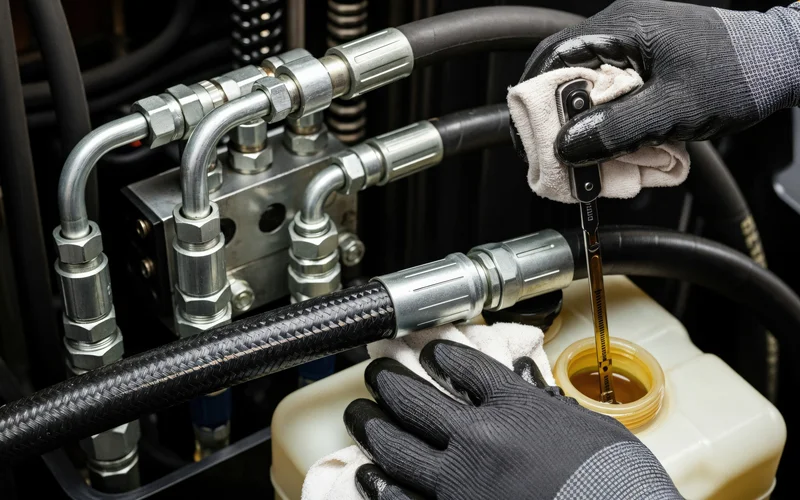
Contamination is widely recognised as one of the leading causes of hydraulic system failure. Your hydraulic fluid can become contaminated with dirt, water, metal wear particles and oxidation sludge, which can all lead to unusual noises and problems within the hydraulic system. However, by ignoring early warning signs, you may not be able to prevent catastrophic failure until it is too late.
Why off-road fleets are especially vulnerable
Off-road fleets are particularly at risk of hydraulic fluid contamination because working environments are typically wet, dusty or muddy. Off-road machinery is also vulnerable to temperature fluctuations, with high operating temperatures and potentially low-temperature working conditions.
The harsh mining and construction environments, paired with long operating hours, put additional strain on off-road machinery, so premature wear and fluid contamination are more likely.
What fluid analysis reveals before failure occurs
When you engage in regular fluid analysis, it can detect early signs of contamination in your hydraulic fluid. This can reveal:
- Wear metals
- Water content
- Oxidation
- Viscosity breakdown
Routine fluid analysis helps fleet managers identify potential issues early, reducing the risk of unexpected downtime and costly hydraulic component failure. Gulf Care is a tailored solution to analyse your lubricant health and minimise unplanned downtime. It can also help you to introduce extended drain interval strategies and select the best high-performance anti-wear hydraulic fluids to provide the best performance and protection.
Preventive maintenance checklist for fleet managers
Preventive maintenance plays a critical role in reducing hydraulic failures, extending equipment life and keeping off-road fleets operating efficiently. By identifying small issues early, fleet managers can minimise unplanned downtime and avoid costly repairs.
✅ Inspect hoses, seals and fittings regularly for signs of wear or leaks
✅ Monitor hydraulic fluid levels and top-up frequency
✅ Listen for unusual noises such as whining, knocking or cavitation
✅ Replace clogged or contaminated filters promptly
✅ Check operating temperatures for signs of overheating
✅ Use the correct hydraulic fluid for the application and environment
✅ Schedule routine fluid analysis to detect contamination and wear early
✅ Encourage operators to report performance changes immediately
A proactive maintenance strategy can help improve reliability, reduce operating costs and keep hydraulic systems performing under demanding off-road conditions.
Don’t ignore the warning signs
Strange noises, leaks and pressure drops are early warning signs of a potentially larger problem within your hydraulic system, so it’s important you don’t ignore them. Waiting until complete failure can dramatically increase repair costs, so act early and engage in regular maintenance. To enhance your off-road fleet reliability, fluid condition monitoring and proper lubrication are essential.
Protect your hydraulic systems before downtime impacts your operation. Discover what lubricant mistakes fleet managers should avoid now.