

Key summary of warning signs engine oil needs topping up
- Common warning signs of low engine oil include dashboard oil lights, unusual engine noises, overheating and poor acceleration.
- Checking your oil regularly with the dipstick is one of the easiest ways to spot low oil levels before they lead to engine damage.
- If your oil appears dark, gritty or contaminated, it may need changing rather than topping up to keep your engine running efficiently.

Engine oil typically needs changing every 5,000–7,500 miles.

Healthy engine oil should be golden or amber, not dark or gritty.

Blue or white exhaust smoke can signal an oil-related issue.
Engine oil is an essential fluid that keeps your vehicle running smoothly. Without it, moving engine parts would grind together, creating friction, heat, and corrosion. Ultimately, this will lead to a breakdown or even engine failure, significantly reducing the lifespan of your vehicle. Therefore, it’s crucial to know when to check engine oil as well as the warning signs to watch out for if it is running low.
Here, we’ll cover 10 common signs that your engine oil needs topping up to keep an eye out for.
1. Low oil level on the dipstick
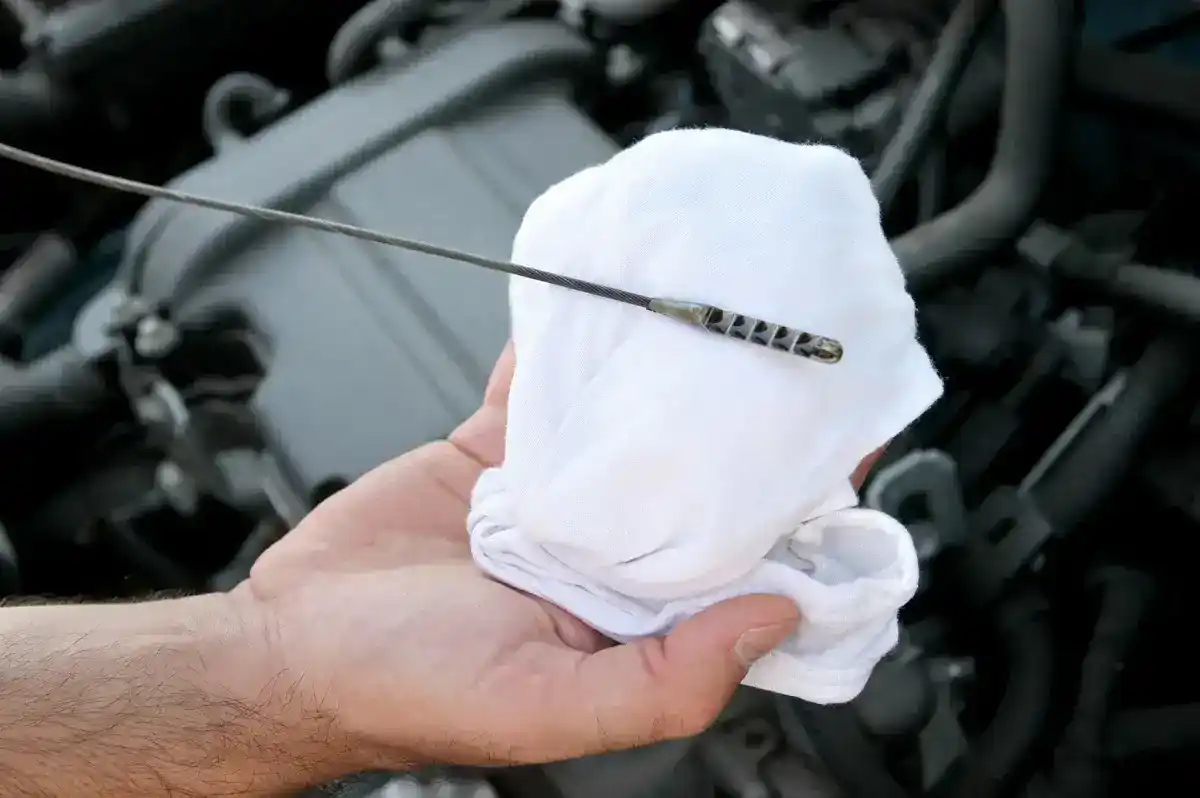
This is the most direct signal that you’re running low on oil. You should check your oil regularly using the dipstick. Do this every few weeks, and if oil falls below the minimum line, a top-up is necessary. If you find that your engine oil regularly needs topping up, this may be a sign of something more serious, such as a leak.
2. Dark, gritty oil
When you check your oil levels using the dipstick, you should also take note of the appearance of your engine oil. Clean oil is golden or amber in colour. If your oil appears especially dark or grimy, it needs changing rather than simply topping up. In this case, be sure to schedule your car for an oil change with a mechanic.
3. Knocking or ticking sounds
There are lots of reasons why your engine might be knocking, but insufficient lubrication is a common one. Strange clunking noises coming from beneath your bonnet could well be caused by engine parts knocking against each other, which can happen when there is not enough oil to go around. If you hear a strange noise, don’t ignore it! Pull over as soon as it is safe to do so and check your oil levels straightaway.
4. Screeching or grating noises
Similar to the knocking sounds, a metallic screeching or grinding noise signals metal-on-metal contact within your engine. Left unchecked, this can create serious friction, which may lead to your engine overheating. It can rapidly wear out internal components and lead to a breakdown. Any unusual sounds are clear warning signs that your engine oil needs topping up.
5. Poor acceleration
If your acceleration feels sluggish or you have noticed a drop in engine performance, this could be another warning sign that your oil needs topping up. Oil ensures all of the engine components move together smoothly and seamlessly. If there is not enough, this can slow down the process, leading to a delayed response when accelerating.
6. Increased engine temperature
An overheating engine is a serious cause for concern and should never be ignored. Oil is one of several fluids and systems that help to regulate engine heat and prevent it from happening. If oil drops too low, this can cause the engine to overheat, as indicated by a rising temperature gauge. This is a dangerous situation, so be sure to pull over safely and brush up on what to do if your car is overheating, and how to prevent it from happening again.
7. Oil pressure warning light
An oil pressure light on your dashboard is a critical sign that your oil needs to be topped up. It demands immediate attention, so make sure you pull over, check your oil levels and top up as soon as it is safe to do so. Don’t forget that engine oil levels should be regularly checked manually using the dipstick – don’t rely on the oil pressure light to tell you when to top up. This may also be a sign of something more serious, like a leak, so check for puddles beneath your car as well.
8. Check engine light
While not always oil-related, an engine warning light could be caused by low oil levels, so it's always worth a check. If checking and topping up your oil does not resolve the issue, you’ll need to schedule a visit to your mechanic for further investigation.
9. Exhaust smoke
Excessive blue or white smoke billowing from your exhaust should not be ignored. This can signal engine oil burning due to low levels or issues with worn components within your engine. If you see an unusual amount of smoke coming from your exhaust, seek professional help from a mechanic to diagnose the issue.
10. Oil leaks
If your engine oil system has sprung a leak, oil levels will drop at a much quicker rate than usual. You may notice puddles of oil underneath your parked car to confirm this is the case. It’s important to get the leak fixed as soon as possible by a qualified mechanic. After the repair, you also need to have your oil changed to prevent contamination.
Frequently asked quetions
It is crucial to check engine oil at regular intervals according to your manufacturer's instructions. This is usually every few weeks and always before a long journey.
If your oil does need topping up or the time comes for a change, be sure to use high-quality engine oil to the correct specifications for your car. This information can be found in your vehicle handbook.
If you have an Electric Vehicle, you should check the e-fluids monthly and always check them before long trips.
The engine oil you need will depend on your car, driving style and the climate you drive in. You should always follow your manufacturer’s recommendations and consult your vehicle handbook to find out exactly what oil you should use.
Keep your engine protected
Keeping an eye on your engine oil levels is one of the simplest ways to protect your vehicle and avoid costly repairs.
- Check your oil regularly to catch low levels before they cause damage.
- Pay attention to warning signs such as dashboard lights, unusual noises and exhaust smoke.
- Top up or change your oil when needed to help maintain engine performance and efficiency.
Using high-performance engine oil usually lasts longer and offers better protection for your car, ensuring you can go long distances without having to constantly top up.
For more vehicle maintenance tips and expert advice, explore our other helpful blog posts.
Explore our car fluids
Sources for further reading
How often should you change your car’s engine oil?, RAC
6 Ways to Tell if Your Car Needs an Oil Change, KwikFit
Different Engine Oil Colors and What They Mean, Drive Racing Oil
Blue or white smoke from my car exhaust – what does it mean?, CarWow