



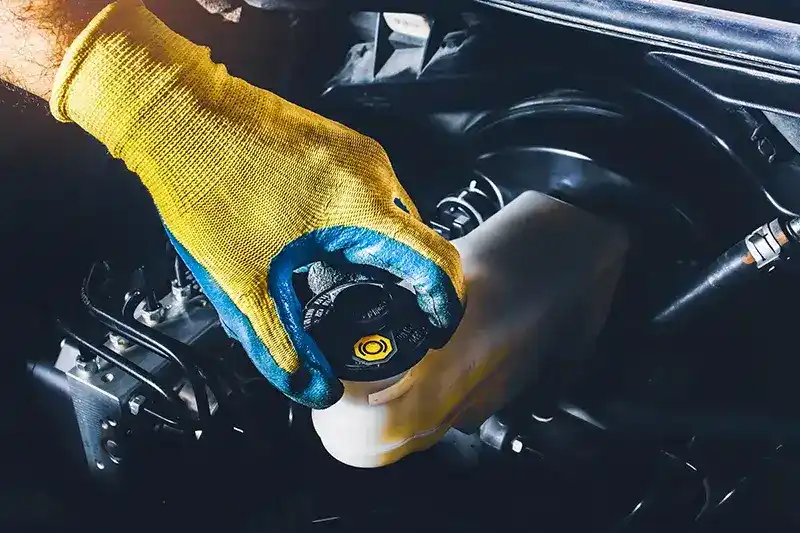
It’s probably not something you think about, but every time your car comes to a safe stop, multiple moving parts make it happen. Brake fluid ensures these components operate effectively and safely. It also transfers force from your foot on the pedal to the system that forces the wheels to stop.
Checking brake fluid regularly and knowing how to do it correctly can make your journeys safer, so it is an essential task to add to your regular car maintenance routine. Just like checking your engine oil, it should be done as frequently as your owner’s car manual recommends - and certainly before a long drive.
In this article, we’ll discuss exactly what brake fluid is, why it’s so important, and share how to check your brake fluid and top it up at home.
What is brake fluid?
Brake fluid is a hydraulic fluid used in most vehicles with a hydraulic braking system, such as cars, motorcycles, and trucks. It allows a small action (such as putting your foot down on a pedal or squeezing a lever), to result in a force strong enough to halt motion entirely.
How does brake fluid work?
When you apply pressure to your brake pedal, the pistons inside the master cylinder compress the brake fluid, creating hydraulic pressure. This pressurised fluid then travels along the brake lines, amplifying the force of your foot hitting the pedal. In turn, the pressurised fluid causes the brake pads to squeeze on the braking system and bring the vehicle to a halt.
In addition to playing a major role in the entire braking function of your vehicle, brake fluid also acts as a lubricant to keep the other components operating smoothly and prevent corrosion. Put simply, without brake fluid, your car would fail to stop when required.
Just like your vehicle's other essential safety features, brake fluid should be regularly checked and topped up as necessary, which can easily be done at home. This is because old brake fluid can become contaminated, absorb moisture or develop air bubbles, reducing the system’s effectiveness.
Changing brake fluid is a much more complicated task that requires the expertise of a trained professional. It is often performed during an annual vehicle service, but you should book an appointment at your local garage if you notice your brakes losing their sensitivity or see a warning light relating to your braking system.
Where does brake fluid go?
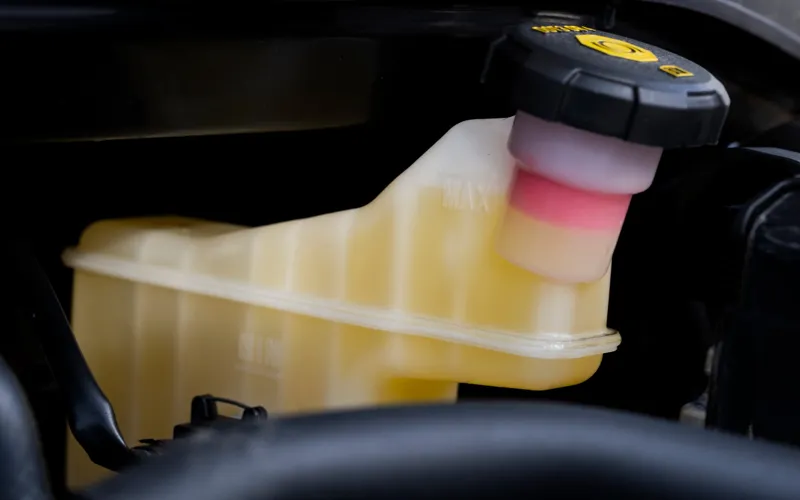
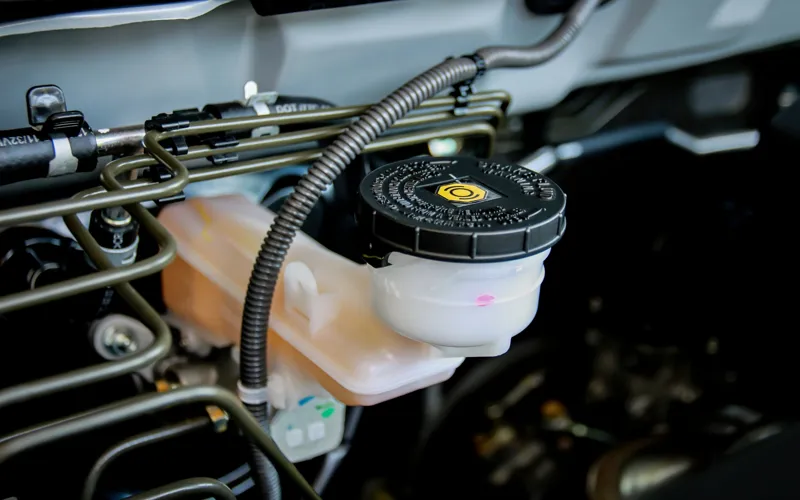
In a standard vehicle, brake fluid is filled in a translucent container located in the engine compartment. This can usually be found under the bonnet (or hood), on the driver’s side of the vehicle. Check your vehicle handbook if you’re not sure.
You should see a plastic reservoir on top, which may even be labelled with the words ‘brake fluid’ or have a specific symbol (typically a yellow circle or an octagon). In most cars, there should be a full and minimum line allowing you to check the fluid level from the outside.
When to check brake fluid
Many manufacturers recommend changing your brake fluid every 2 years, but you should always follow your manufacturer’s recommendations in your owner's manual. In between brake fluid changes, you also need to check the condition of your brake fluid to make sure it is not too low, and is still a clear or light yellow colour.
You should perform a visual inspection of your brake fluid every few months or if you have any concerns, check it monthly. Before you inspect your brake fluid, you should make sure that the vehicle is cold and the engine is off, so it may be a good idea to check your brake fluid levels before your journey.
How to check brake fluid
We recommend checking your brake fluid in line with the recommendations in your car’s owner’s manual to maintain your vehicle’s optimum safety and performance standards. Checking your brake fluid only takes a few minutes:
- Park on a flat surface, where it is safe to do so, to get an accurate reading.
- Locate the brake fluid reservoir (see the above section on ‘where does brake fluid go’).
- Brake fluid has a clear to light amber colour which should be visible through the translucent reservoir. There should be a minimum and maximum line allowing you to check whether your brake fluid needs topping up or not.
Which brake fluid do I need for my car?
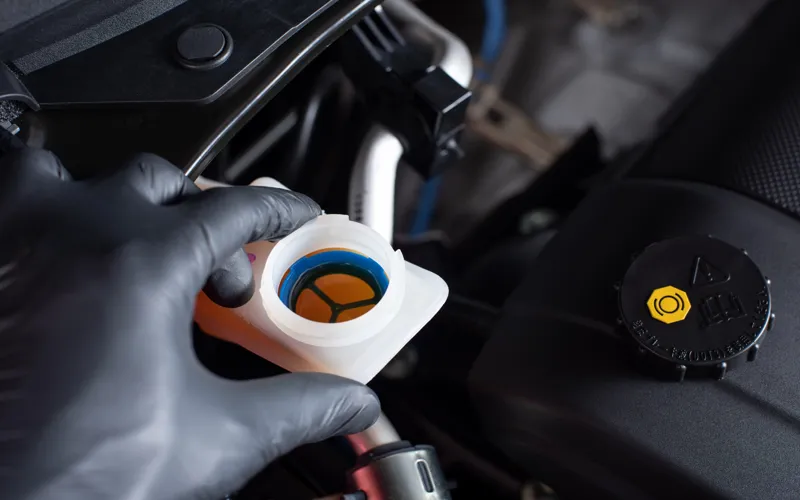
There are several different types of brake fluid, and the most common ones are known by their DOT specification. The type best suited for your vehicle will be listed in your owner’s manual, and may also be inscribed on the cap of the brake fluid reservoir.
The most common types are DOT3, DOT4, and DOT5.1. Typically, brake fluids with a higher number have higher boiling points for performance driving.
How to top up brake fluid
If, after checking your brake fluid, you find that you are running low or reaching the minimum line, it’s time to top up.
- Purchase the right brake fluid for your vehicle (see above).
- Park on a flat surface.
- Remove the reservoir cap and use a funnel to pour in the fluid until it reaches the ‘full’ line.
- Re-attach the reservoir cap securely.
When to change brake fluid
It’s not always the right course of action to simply top up your brake fluid. Sometimes, it needs to be completely changed. When checking your brake fluid, you should look for the following things to assess the condition or you may notice these signs when driving:
- A spongy brake pedal can be a sign of air or moistrure in the brake lines
- The dashboard warning light can be a sign that there’s a problem
- Brown, dark or murky fluid signals you need to change it
- Poor braking performance or increased stopping distance
- Strange noises or a burning smell when braking
Many manufacturers recommend that you change your brake fluid every 2-3 years or every 24,000 miles. However, if you notice any of the above symptoms, you may need to get your brake fluid changed immediately, rather than waiting for the manufacturer’s recommended intervals.
Routine maintenance is key
Checking and topping up your brake fluid is a simple task that can make a big difference in keeping your car running at its best. It’s important to follow your manufacturer’s recommendations in your owner's manual regarding fluid change intervals and what brake fluid you should use. However, if your brake fluid needs changing, you should always consult a mechanic.
Adding a five-minute brake fluid check to your regular car maintenance routine is a great way to prevent unexpected faults and stay safe on the roads. Learn more about our specially formulated car lubricants now.