



Gulf introduces API SQ RC / ILSAC GF-7, meeting modern engine demands.
17 Dec 2025
Next generation engine oil performance.
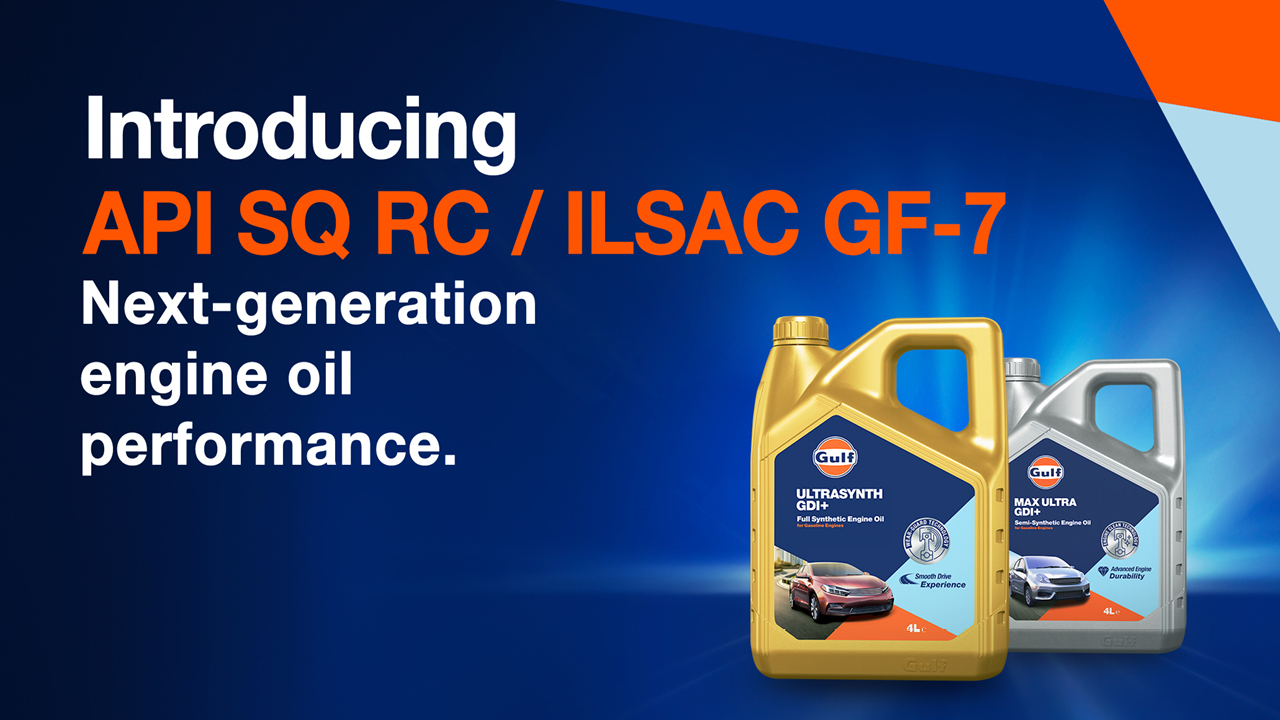
Gulf introduces API SQ RC / ILSAC GF-7, the next-generation passenger car engine oil specification, designed to meet the evolving demands of modern gasoline engines. With evolving engine designs, modern passenger vehicles call for advanced engine oils that offer improved engine protection, engine durability and fuel economy benefits. Compared to the previous generation specifications, it sets a new benchmark in clean, efficient, and future-ready engine oil technology.
API SP RC / ILSAC GF-7 standards took effect on March 31, 2025. RC and GF-7 is applicable only for SAE 0W-16, XW-20 and XW-30. It is not applicable for SAE XW-40 and XW-50.
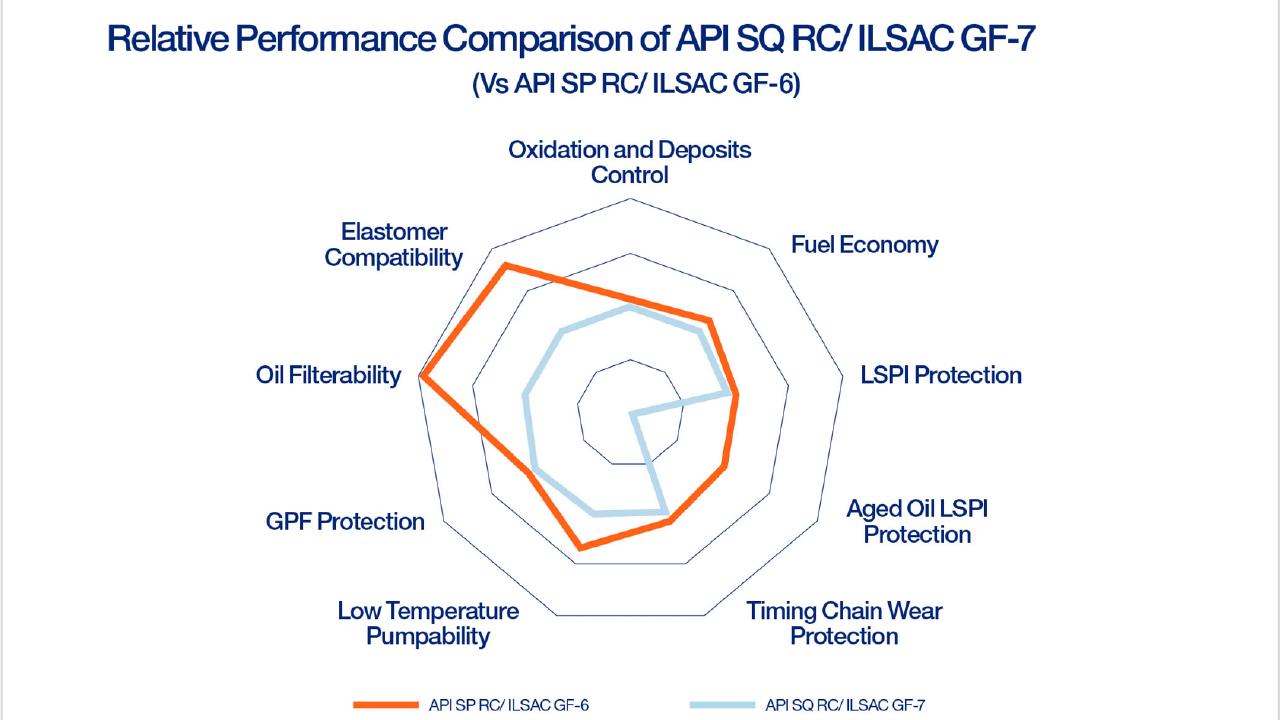
The new API SQ RC / ILSAC GF-7 supersedes the API SP RC / ILSAC GF-6 industry standard by introducing an enhanced performance requirement across eight key engine test areas.
- Sequence IIIH, Oxidation and Deposit Control
- Sequence VIE, Fuel Economy
- Sequence X, Timing Chain Wear Protection
- Sequence IX, Low-Speed Pre-Ignition Protection
- MRV, Low Temperature Pumpability
- Sulfated Ash, Gasoline Particulate Filter (GPF) Protection
- Oil Filterability, Engine Oil Gelation Test (EOGT)
- Elastomer (Seal) Compatibility, Elastomer Compatibility
1. Keep Your Engine Clean and Running Longer
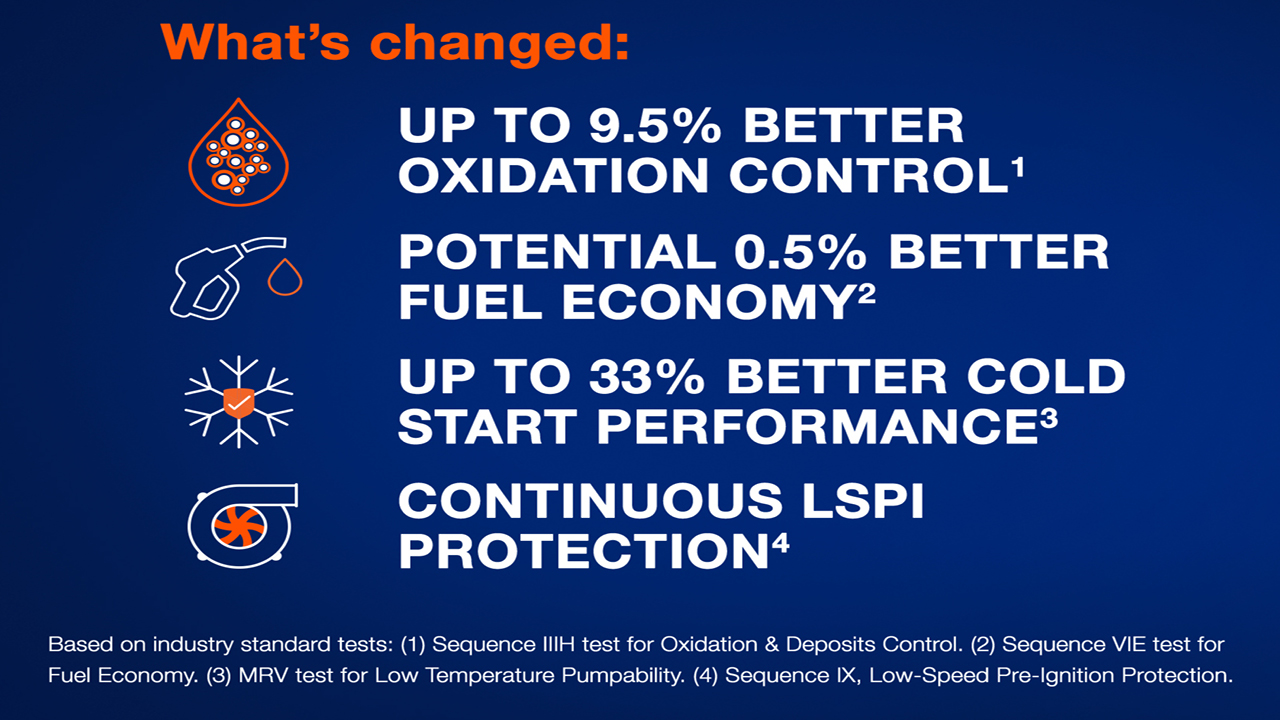
The new API SQ RC / ILSAC GF-7 engine oils are built to fight off harmful build-up better than ever. They improve oxidation and deposit control by raising the benchmark value from ≥4.2 (API SP RC / ILSAC GF-6) to ≥4.6 (API SQ RC / ILSAC GF-7). What does that mean for you? A cleaner-running engine, longer-lasting oil, and better all-around performance. (Tested: Sequence IIIH).
2. Save Fuel, Save Money
With up to 0.5% better fuel economy compared to API SP RC / ILSAC GF-6 oils, new API SQ RC / ILSAC GF-7 helps you get more out of every tank. That’s less money spent at the pump and fewer emissions from your vehicle. (Tested: Sequence VIE).
3. Stronger Protection for Modern Engines
If your car has a turbocharged direct injection engine (TGDI), new API SQ RC / ILSAC GF-7 has you covered. Unlike API SP RC / ILSAC GF-6, which tested LSPI only on fresh oil, API SQ RC / ILSAC GF-7 ensures protection throughout the oil’s entire lifespan – both fresh and aged. That means better drivability and less engine stress, mile after mile. (Test: Sequence IX).
4. Stronger Defence Against Wear
New API SQ RC / ILSAC GF-7 improves timing chain wear protection by tightening the allowable wear limit – from 0.085 mm (under API SP RC / ILSAC GF-6) to 0.080 mm. It may seem like a small difference, but it means your engine stays stronger and more reliable in the long run. (Test: Sequence X)
5. Easier Cold Starts, Better Protection in Winter
New API SQ RC / ILSAC GF-7 performs better in low temperatures, with improved pumpability (low temperature pumping viscosity limits reduced from 60,000 cP in API SP RC / ILSAC GF-6 to 40,000 cP in API SQ RC / ILSAC GF-7). That means faster oil flow when you start your engine on cold mornings, giving you better wear protection right from the first turn of the key. (Tested: MRV).
6. Keeps Your Particulate Filter Cleaner
New API SQ RC / ILSAC GF-7 helps protect your Gasoline Particulate Filter (GPF) by producing fewer ash deposits – down from 1.0 wt% in API SP RC / ILSAC GF-6 to just 0.9 wt%. This means less risk of GPF clogging, fewer maintenance issues, and a longer-lasting filter. (Parameter: Sulfated Ash).
7. Smooth Oil Flow, Stronger Protection
In addition to the filterability tests in API SP RC / ILSAC GF-6, API SQ RC / ILSAC GF-7 also has an oil gelation test. This means that oil passes through the oil filter smoothly to ensure oil availability at critical engine areas requiring protection. (Tested: EOGT & EOFT).
8. Built to Protect Your Engine Seals
New API SQ RC / ILSAC GF-7 is engineered to be compatible with a wider range of engine seal materials – protecting 9 types of elastomers versus 5 in API SP RC / ILSAC GF-6. This means lesser seal related maintenance issues, oil leakage prevention and protects engine against external contaminant ingress. (Test: Elastomer Compatibility).