


White, Blue or Black: What Different Types of Exhaust Smoke Say About Your Engine
05 Feb 2026
What is exhaust smoke and why does it matter?
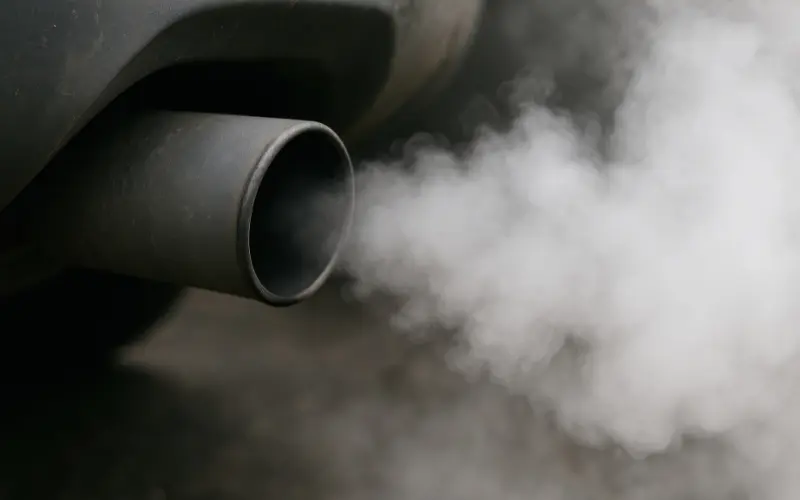
Noticing smoke coming from the exhaust of your car can be worrying, especially if it’s thick, coloured, or persistent. Essentially, car exhaust smoke is a visible sign of combustion, which is the process that powers your engine. While some visible light vapour is normal, particularly on cold mornings, continuous or unusually coloured smoke can indicate that something in your car isn’t working as it should be.
Understanding what the different types of exhaust smoke mean can help you spot potential problems early and prevent more serious engine damage, which can happen if the cause isn’t found and fixed quickly. If you’ve just noticed something unusual about the smoke coming from your car exhaust, identifying the cause is the first step to keeping your vehicle healthy.
In this guide, we’ll help you to understand what the different kinds of exhaust smoke might mean and what you should do about it.
What the colour of exhaust smoke means
White smoke from exhaust
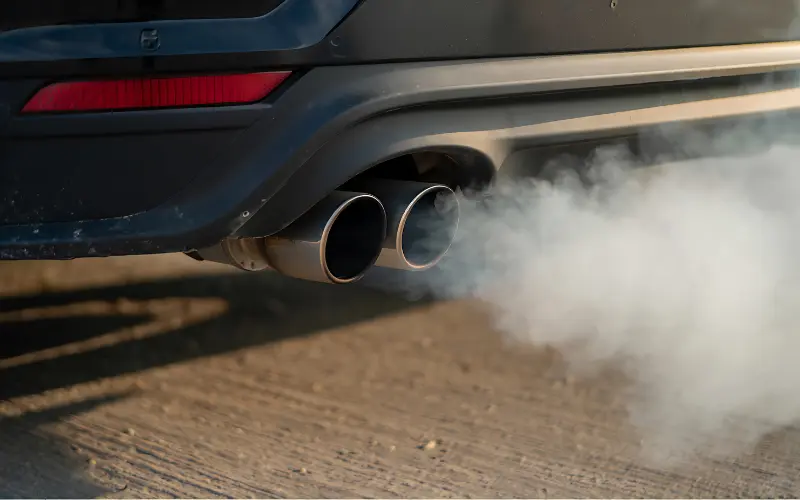
White smoke coming from your car exhaust can have a few different causes, depending on its appearance.
-
Thin, light vapour: If it disappears quickly after starting the engine, this is usually just a sign of condensation. On cold days, water vapour in the exhaust system turns into visible steam. If the steam clears quickly, it’s usually nothing to worry about.
-
Thick, lingering white smoke: If the white smoke from the exhaust is thick and continues after the engine has warmed up, this could indicate that coolant is entering the combustion chamber, often due to a leaking head gasket, cracked engine block, or damaged cylinder head. The coolant burns alongside the fuel, creating dense white smoke, and sometimes also comes with a sweet smell from burning coolant.
Persistent white smoke should never be ignored, as coolant leaks can lead to overheating and major engine damage.
Blue or grey smoke from exhaust
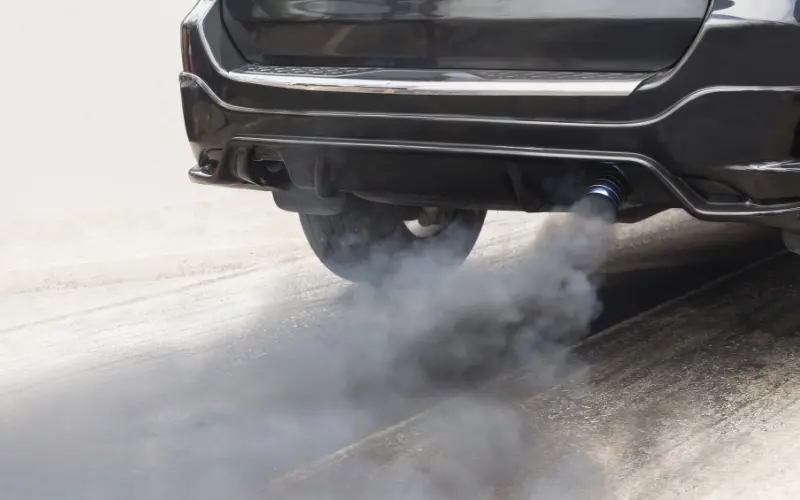
If the smoke coming from your car exhaust is a blue or grey colour, it usually means that your engine is burning oil, which could have several causes, including worn piston rings, valve seals or issues with the turbocharger, if your car has one.
Blue coloured smoke from the exhaust often indicates that oil is leaking into the car’s combustion chamber and burning with the fuel. This is usually accompanied by a drop in oil levels or noticing that you’re having to top up more often.
Grey coloured smoke from the exhaust can sometimes be mistaken for blue smoke, as the two can look very similar. Grey smoke can indicate excess oil or a blocked or damaged PCV (Positive Crankcase Ventilation) valve. It could also indicate that automatic transmission fluid is entering the engine through a faulty vacuum modulator in older automatic cars.
If you notice grey or blue smoke coming from your exhaust, it’s always best to get it checked out by a professional as early action can help prevent much bigger problems if you continue to drive the car without finding out what is wrong.
Black smoke from exhaust
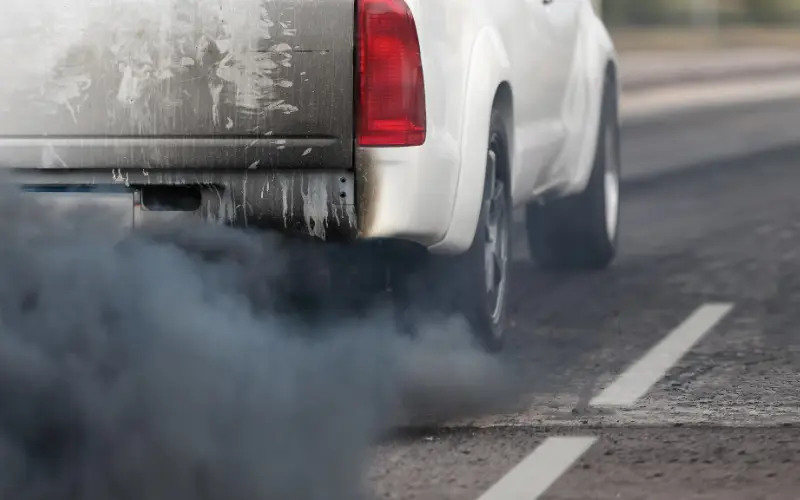
Black smoke coming from the exhaust is a sign that your engine is burning too much fuel. This issue is most common in diesel engines but can also occur in petrol engines at times.
Seeing some black smoke from the exhaust when first starting up a diesel car is not unusual, but if it doesn’t clear within a minute or two, this can be a sign that there is something wrong.
The usual causes of black smoke from the exhaust include:
-
In diesels, a build up of soot in the diesel particulate filter (DPF). This will usually also be indicated by an orange warning light on the dashboard.
-
A clogged or dirty air filter (restricting airflow to the engine)
-
Faulty fuel injectors or sensors
-
Problems with the EGR (Exhaust Gas Recirculation) system or turbocharger
-
Excess fuel being supplied due to a malfunctioning ECU or carburettor (in older cars)
Excess fuel burning creates thick, dark smoke and can drastically reduce fuel economy. It also increases emissions, which may cause your vehicle to fail emissions testing or damage the catalytic converter over time.
What to do if your exhaust is smoking
If you notice any unusual looking smoke coming from your exhaust, it’s important not to ignore it. Acting early can save you time, money, and stress. Here’s what to do:
-
Look at the smoke: Note the colour, thickness, and whether the smoke appears continuously when you’re driving or only at certain times (e.g. when starting up or accelerating).
-
Check your fluids: Look for drops in coolant or engine oil levels, along with visually checking for contamination (for example, milky-looking engine oil could suggest coolant is mixing with the oil).
-
Listen and smell – A sweet, burnt, or fuel-like smell can give clues about what’s happening inside the engine. Taking note of any unusual noises that your car is making while running can also help a mechanic to diagnose the issue.
-
Seek professional help – It’s always best to have a qualified mechanic inspect the vehicle if you’re experiencing ongoing issues with smoke from the exhaust. Describe the smoke colour, any fluid changes and any smells or unusual noises when you speak to the mechanic, as this can help them get to the bottom of the problem quicker.
Catching the issue early could mean a simple fix, like replacing an air filter, rather than a costly engine rebuild if the problem isn’t sorted out and further damage is done.
Car exhaust smoke FAQs
Is it normal to see smoke from my exhaust when I start the car?
On colder days, it’s very normal to see a light white coloured vapour from the car exhaust when you first start the car and until the system has warmed up. This is just condensation turning to steam and should disappear after a few minutes.
Why is my exhaust smoking in a hybrid car?
Depending on the type of hybrid car you have, especially if it’s a plug-in hybrid, it’s not uncommon to see white vapour coming from the exhaust even a few minutes or miles into the journey. This is because hybrid cars don’t always start up the engine straight away if they have an electric-only mode, and the thin white smoke caused by condensation vaporising will only start when the engine kicks in.
As long as it is only thin, white vapour that quickly disappears when you continue driving and doesn’t turn into thicker smoke or change colour to blue, grey or black, it’s usually nothing to worry about.
Why is my exhaust smoking when I accelerate?
If you notice that your exhaust smoke only appears when you accelerate, this could indicate a problem with the car’s turbo, piston rings, or an issue with the fuel mixture. It’s always recommended to get this checked out by a qualified mechanic.
Is black smoke from a diesel car normal?
Some older diesels may occasionally give off a small amount of black smoke when accelerating hard. If the car’s DPF is clogged with soot, this can also cause black exhaust smoke. You can usually clear the DPF by driving at a consistent speed of around 50 mph or more for around 20 minutes, which will usually burn off the soot and the DPF warning light should go off.
If the DPF warning light is red (rather than orange) or stays on after a long drive, or there is continuous or thick smoke that doesn’t clear quickly, this should always be investigated by a mechanic.
Can poor quality engine oil cause exhaust smoke?
Low-grade or incompatible oils can damage seals and gaskets, leading to oil leaks. When oil leaks into the combustion chamber, it burns alongside fuel and produces blue or grey smoke.
It’s also important to use Low SAPS (Sulphated Ash, Phosphorus and Sulphur) oils in modern vehicles fitted with diesel particulate filters (DPFs) or catalytic converters.
Non-Low SAPS oils that contain higher levels of sulphated ash, phosphorus or sulphur can lead to blocked DPFs, catalyst damage, increased emissions, and higher maintenance costs over time.
To avoid these problems, always choose an oil that meets your vehicle manufacturer’s specifications and service requirements.
Keeping your car engine running at its best
While a little harmless vapour coming from your exhaust when you first start your engine is normal, consistent smoke from the exhaust usually points to something that needs attention. The key is to act quickly, by getting a professional to diagnose the problem, fix the underlying issue and prevent further wear or damage.
Regular maintenance also plays a huge role in preventing engine issues and maintaining car performance. Keeping your oil topped up and using the right grade helps protect internal components, reduce emissions and improve overall performance.
If you’re unsure which oil is best for your vehicle, check your owner’s manual and browse our full range of engine oils designed to help keep your car running smoothly and efficiently, mile after mile.
This article is for general information purposes only and is not a substitute for professional diagnosis or repair. If you notice continuous or unusually coloured smoke from your vehicle’s exhaust, consult a qualified mechanic as soon as possible. Always refer to your vehicle manufacturer’s guidelines when selecting engine oil or carrying out maintenance.